 david@renovolaw.com



 1-833-673-6686

What Is the Difference Between Chapter 7 and Chapter 13 Bankruptcy?

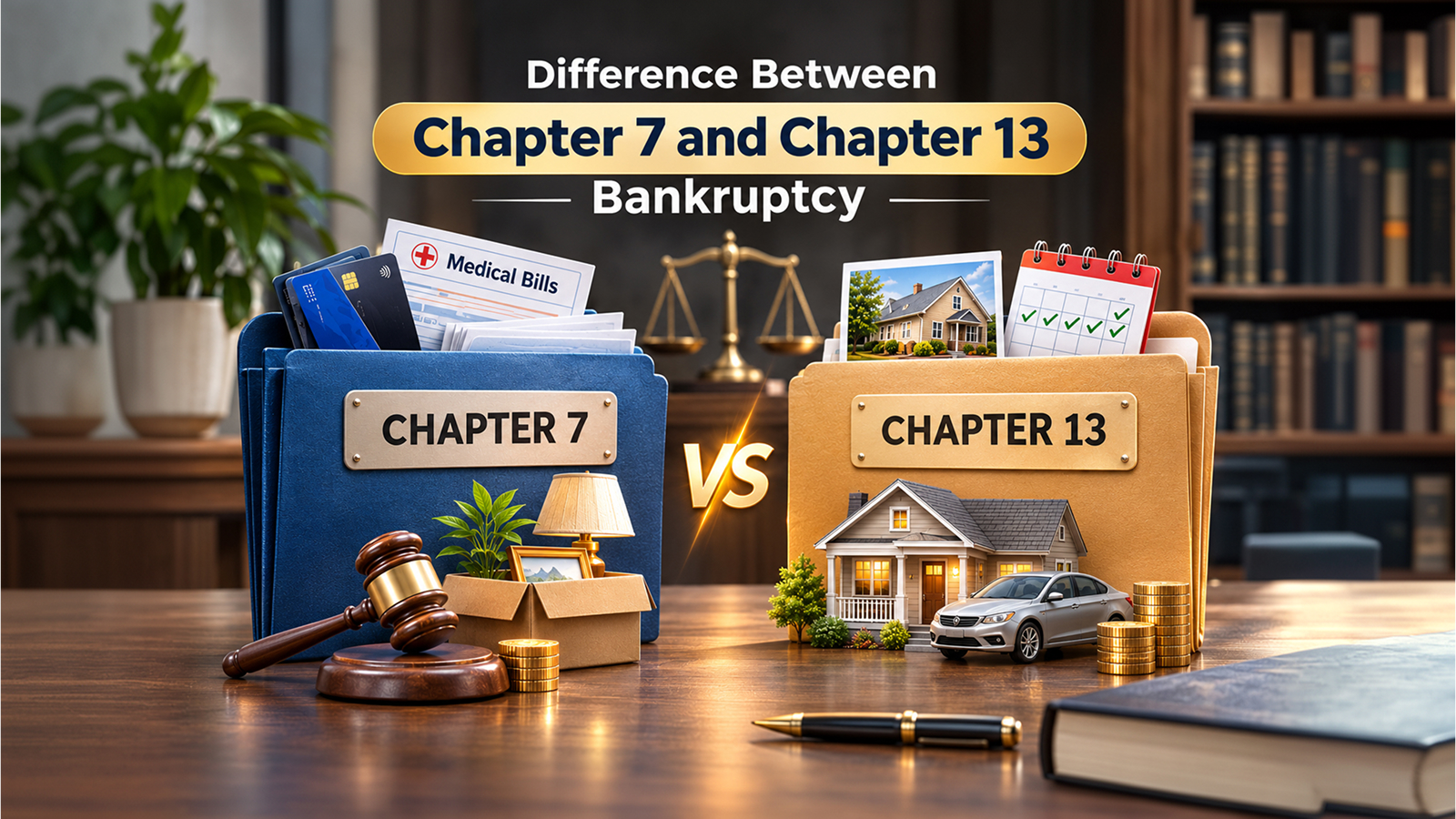
What Is the Difference Between Chapter 7 and Chapter 13 Bankruptcy?
Dealing with overwhelming debt can feel stressful and uncertain, especially when bills keep piling up and financial relief seems out of reach. Fortunately, bankruptcy may offer you an opportunity to regain control of your finances and move toward a fresh start. Understanding the difference between Chapter 7 Bankruptcy and Chapter 13 Bankruptcy is an important first step in finding the right option for your situation.
What Is Chapter 7 Bankruptcy?
Chapter 7 Bankruptcy can offer a fresh start for individuals who feel overwhelmed by debt and are struggling to keep up with their financial responsibilities. If credit card bills, medical expenses, or personal loans have become too difficult to manage, Chapter 7 may provide a way to get relief and start rebuilding your financial future.
Commonly known as liquidation bankruptcy, Chapter 7 allows eligible individuals to have many qualifying debts, including credit card balances, medical bills, and personal loans, legally discharged. During the process, a bankruptcy trustee may sell certain non-exempt property to repay creditors. However, that doesn't necessarily mean you'll lose everything you own. Depending on your situation, applicable bankruptcy exemptions may help you protect important assets, such as your home, vehicle, and personal belongings.
For many people, Chapter 7 Bankruptcy is an opportunity to leave the burden of overwhelming debt behind and take the first step toward a more secure financial future.
What Is Chapter 13 Bankruptcy?
Chapter 13 Bankruptcy can be a helpful option for individuals who are struggling with debt but still have a regular source of income. If you're falling behind on bills, struggling to keep up with mortgage payments, or worried about losing your property, Chapter 13 may give you an opportunity to get back on track without having to give up everything you've worked hard for.
Commonly known as reorganization bankruptcy, Chapter 13 allows you to create a repayment plan approved by the court, usually lasting three to five years. Rather than trying to pay everything at once, you can make payments over time based on what you can realistically afford, taking your income, living expenses, and overall financial situation into account.
One of the biggest advantages of Chapter 13 Bankruptcy is that it may help you catch up on missed mortgage payments and protect your home from foreclosure while you follow the repayment plan. It can also stop many collection efforts and give you breathing room to focus on getting your finances back in order.
For many people, Chapter 13 is not just about managing debt; it's about protecting what matters, getting a second chance, and moving toward a more stable financial future.
Key Differences Between Chapter 7 and Chapter 13 Bankruptcy
| Feature | Chapter 7 | Chapter 13 |
| Main purpose | Debt liquidation and discharge | Debt reorganization |
| Repayment plan | No | Yes |
| Typical duration | A few months | 3–5 years |
| Income requirements | Subject to eligibility and means test | Requires regular income |
| Property | Non-exempt assets may be sold | Generally retain property while meeting plan requirements |
| Mortgage arrears | Generally cannot catch up through a repayment plan | May allow repayment of missed payments over time |
| Debt discharge | Most qualifying unsecured debts | Most qualifying debts after plan completion |
Which Bankruptcy Option Is Right for You?
Chapter 7 Bankruptcy: May be appropriate if you have limited disposable income and need relief from overwhelming unsecured debt.
Chapter 13 Bankruptcy: May be appropriate if you have regular income, want to catch up on missed mortgage payments, or need a structured repayment plan.
Every financial situation is different. Eligibility, property exemptions, income, and the types of debt you owe can affect which bankruptcy option is appropriate.
Get Help From Renovo Law Group APC
At Renovo Law Group APC, David H. Chung provides personalized legal guidance to help individuals and families understand their bankruptcy options. Whether you are considering Chapter 7 Bankruptcy or Chapter 13 Bankruptcy, our goal is to help you find a practical path toward financial stability.
Take the first step toward a fresh financial start. Contact Renovo Law Group APC today to schedule your free consultation.
Tags: Chapter 7, Chapter 13 Bankruptcy


Leave a Reply

Still Have Questions?
Our experienced attorneys are here to provide personalized answers to your specific situation.